French Reference Center of PNS and AE
What is a Reference Center?
A reference center for a rare disease or group of rare diseases is a collection of multidisciplinary hospital expertise organized around highly specialized medical teams. A disease is considered "rare" when it affects one in 2,000 people; this means that in France, fewer than 30,000 people are affected by each condition.
Missions of the Reference Center
- Disseminate knowledge about neuropathic sclerosis (NPS) and ankylosing spondylitis (AS)
- Promote the diagnosis of these diseases
- Reduce the time between diagnosis and patient care
- Improve the quality of patient care
- Promote research
- Conduct university, postgraduate, and extracurricular teaching
Role and organisation
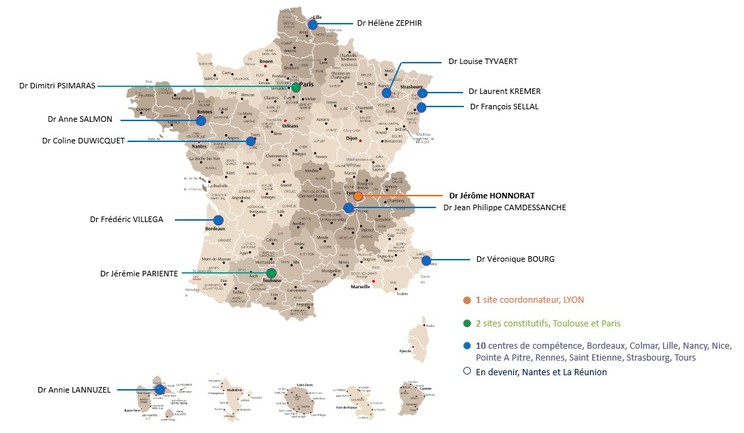
The Reference Center includes 1 coordinating site (Lyon), 2 constituent sites (Paris and Toulouse), and 10 centers of expertise (Bordeaux, Colmar, Lille, Nancy, Nice, Pointe-à-Pitre, Rennes, Saint-Étienne, Strasbourg, and Tours). The coordinating site manages the network dedicated to PNS and AE, the constituent sites provide complementary expertise, referrals, research, and training, and the centers of expertise provide care and follow-up for patients as close as possible to their homes.
The Lyon coordinating center relies on an expert, multidisciplinary team dedicated to rare neurological diseases. It includes:
 The coordinator of the reference center, Géraldine Picard, is responsible for the overall organization of the center, the coordination between the medical, scientific and institutional teams, as well as the link with partners and patients.
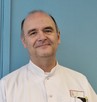 The center's director, Professor Jérôme Honnorat, defines the medical and scientific directions, manages research projects, and ensures excellence in the care of patients with rare neurological diseases.
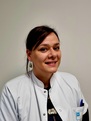
 two neurologists recognized specialists in these pathologies: Dr Marie Benaiteau and Prof Bastien Joubert who are involved in the diagnosis and monitoring of patients, with particular expertise in rare and complex neurological syndromes and actively participate in the clinical and translational research work of the center.
The reference center joined the BRAIN TEAM sector in december 2015. This team brings together a group of rare diseases having in common the rare pathologies of the central nervous system in their broadest dimension. Thus, the Brain team combines pathologies with motor or cognitive expression, familial or sporadic in both adults and children.
Reference Center key numbers
Autoantibodies detected per year from the labelisation in 2007 (2008 includes 8 months of activité in 2007)
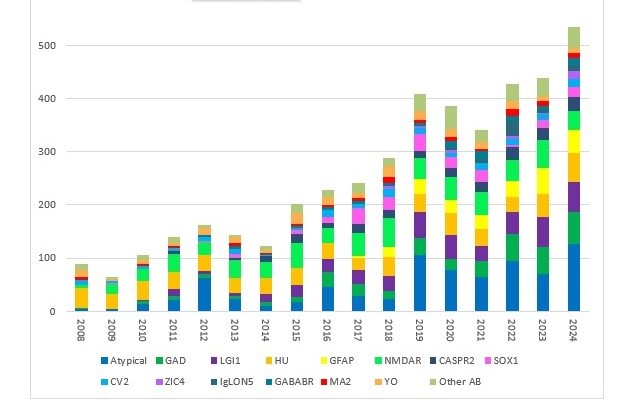
The Reference Center boasts the world's largest collection, comprising 3,800 serum samples, 2,200 cerebrospinal fluid samples, 3,600 DNA samples, 721 lymphocytes, and 420 tumors. The database now includes data on over 5,800 patients.
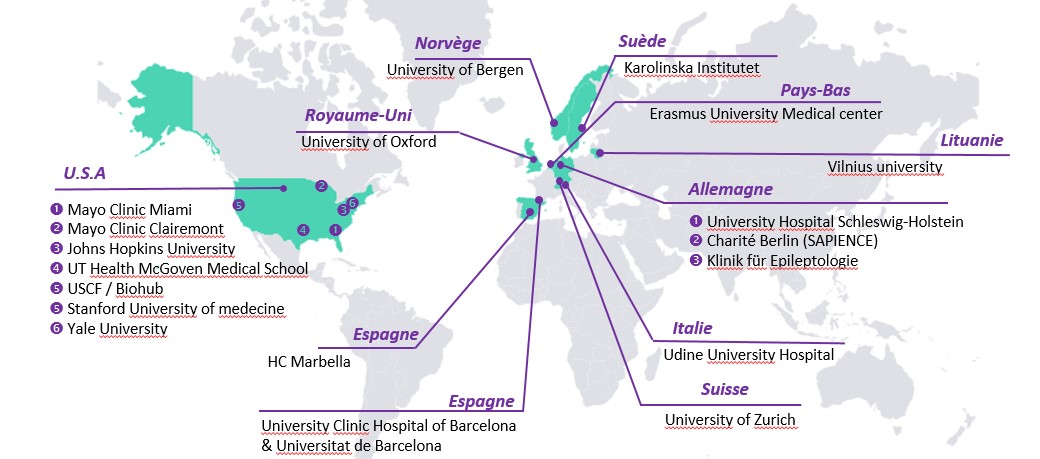
It collaborates with more than 18 international partners, resulting in the publication of over 30 scientific articles in top-tier journals. These articles have led to the identification of new antibodies and a better understanding and characterization of the disease.